
The city plans to add a speed camera on a stretch of Upper Stoney Creek parkway, where four people died this year — unless Ontario bans the technology this month.
Courtesy of The Hamilton Spectator
A looming photo-radar ban will prevent Hamilton from adding speed cameras on collision-prone Upper Centennial Parkway, where four people have died in crashes this year.
City council approved plans in September to double its four-camera arsenal and add one of the automated speed enforcement (ASE) boxes along the parkway atop the Stoney Creek Mountain.
A new parkway safety study — requested after a double-fatal collision near the intersection of Highgate Drive — showed average driving speed above the limit and concerning clusters of collisions at intersections along the route.
But late last month, Premier Doug Ford announced he would ban the “cash grab” speed cameras after the provincial legislature reconvenes Oct. 20 — despite growing protests by dozens of cities supportive of photo-radar, including Hamilton.
Ward councillor Brad Clark said he will be “heartbroken” if the threatened ban axes a safety measure at least some residents are clamouring for on the increasingly busy parkway.
“We have experienced fatalities on that road; families have lost loved ones because of speeding on that road,” he said in an interview. “We have a tool to slow people down — one that has proven to be effective — and you’re going to prevent us from using it?”
Speed cameras by the numbers in 2025
3,516 Tickets handed out by Hamilton cameras this year (through end of August)
1,114 Location with most tickets (Highland Road, west of Upper Centennial)
$559,000 Ticket revenue from four rotating cameras (end of August)
27 per cent Percentage of additional drivers obeying speed limit after camera installation
More than 20 mayors, including Hamilton Mayor Andrea Horwath, submitted a written appeal to Ford last week to rethink the threatened ban. Ontario’s police chiefs, a study from Toronto’s Hospital for Sick Children (SickKids) and Hamilton’s own camera data all point to the technology being effective in slowing speeders.
The premier responded swiftly in his own letter, scolding “greedy” municipalities for wanting to keep ticket revenues and vowing instead to fund traffic-calming infrastructure like speed bumps to bring speeding “down to zero.”
Hamilton already uses its revenues from speed tickets exclusively to pay for traffic safety improvements, noted Clark.
But the larger challenge on Upper Centennial, he added, is that the former provincial highway above the escarpment has speed limits between 60 and 70 km/h.
City traffic staff have said they cannot recommend speed bumps on arterial roads that are designed to move traffic more quickly and efficiently.
The planned new speed camera is supposed to be located on the parkway between Rymal and Highland roads.
The recent safety study showed 15 out of every 100 drivers were travelling faster than 92 km/h — or more than 22 kilometres over the posted limit — in a stretch of the parkway bookended by the two latest fatal crashes on Upper Centennial.
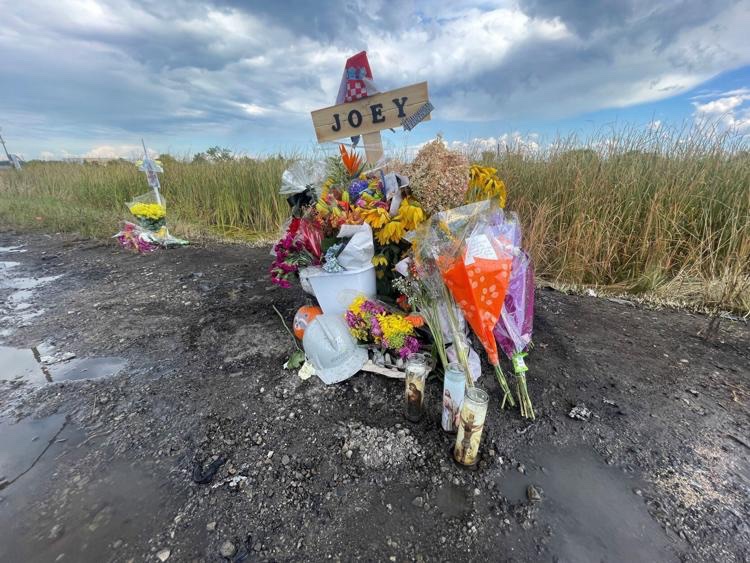
In August, two people died in a fiery two-car crash near Highgate Drive, the entrance to a small suburban enclave. Nearby, family members set up a roadside memorial for one of the victims, Joey Majerovich.
The status of that police investigation was unclear Friday. But a ward office update to residents said in that crash, it appeared a driver lost control while turning onto the parkway.
Just less three months earlier, a multi-vehicle collision killed a driver and passenger in a car on the parkway between Green Mountain Road and Mud Street.
Police later charged a 32-year-old Hamilton man with impaired and dangerous driving, as well as Highway Traffic Act charges alleging stunt driving and speeding over 140 km/h in a 70 km/h zone.
People are fed up with the “terrifying” speeding and road-racing that happens along the corridor, said near-parkway resident Alisa Bennett-Infanti.
“The drag racers keep me awake at night,” she said in an interview.
Bennett-Infanti called it a “mistake” for the province to axe speed cameras, “especially in school zones,” expressing hope the premier will reconsider and allow installation along Upper Centennial.
But she added automated enforcement can only do so much — so she is hoping the province comes through regardless on funding pricier road-design changes like traffic circles that force “straight line road racers” to slow down.
“We also need more police enforcement to catch these people who do not care — about cameras, the law, other people on the road,” she said.
“Speed cameras work great for people like me — but those (people) driving drunk at twice the limit at midnight, they don’t care about cameras.”
In the aftermath of the latest double-fatal on Centennial, Hamilton police ramped up in-person enforcement, issuing 57 traffic charges related to speeding, stunt driving and other unsafe behaviour in a crackdown in mid-September.
The city is also planning other road and traffic safety improvements, said Clark, including redesigned intersections and lowering the parkway speed limit to 60 km/h from the edge of the escarpment to Rymal Road.
But physical infrastructure changes take time, he said, and a speed camera could go into action within weeks — if the province lets it happen.
“I am appealing to the premier to be flexible,” Clark said, noting more and more municipal leaders are pressuring the government to reach a compromise. “We only have so many tools to slow people down on this roadway and we’re about to lose one of them.”


 Brad Clark Report
You must be logged in to post a comment.