
City staff have recommended the reduction of grass cutting in these parks/parkettes in Ward 9 (see graphics below). I have opposed this plan to reduce grass cutting on these properties without any public consultation. Staff are proposing a reduction in grass cutting in urban right of ways from 12 cycles to 9 cycles.
If you oppose this reduction in services, please write to the Mayor and Councillors to clerk@hamilton.ca
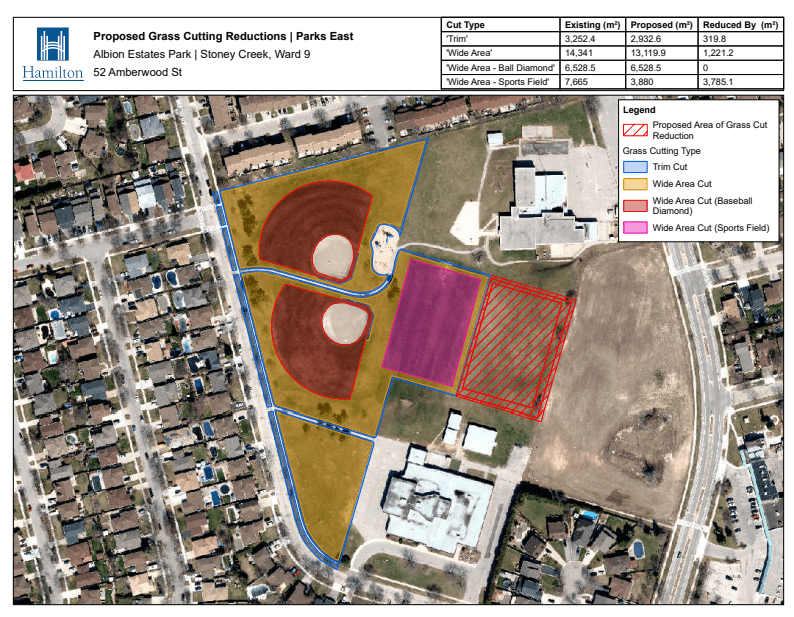
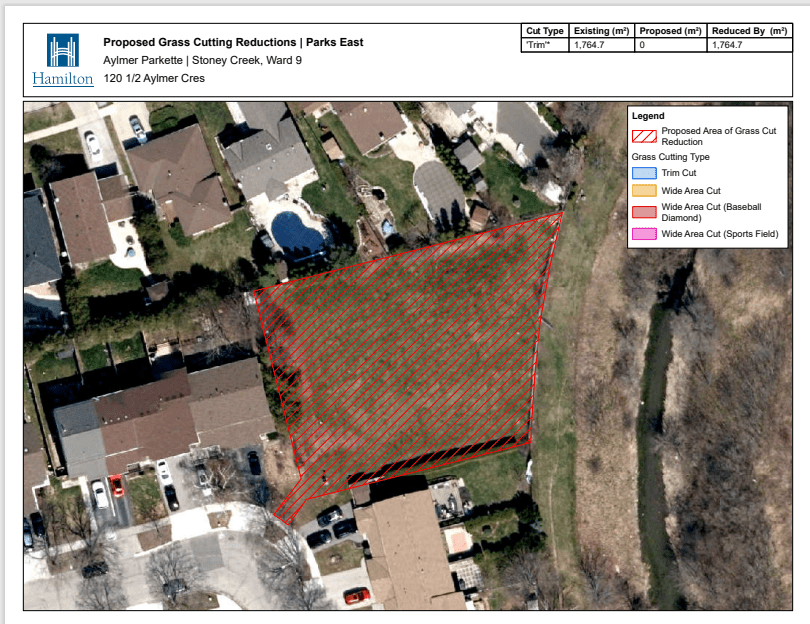
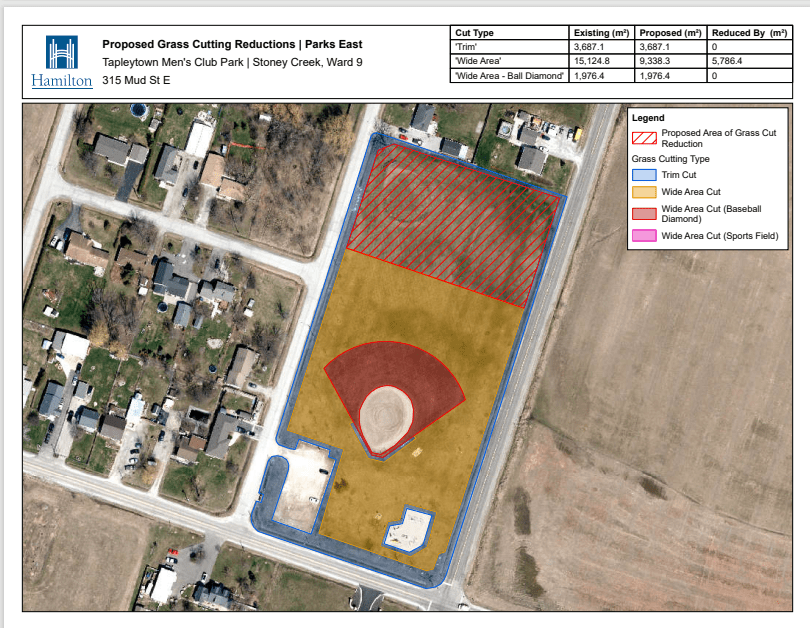
Please find below additional information regarding the proposed grass-cutting changes as provided by General Manager Jackie Kennedy.
Q1. What changes are being proposed for grass cutting in urban right-of-way areas?
A1: The City is adjusting its grass cutting schedule within municipal right-of-way areas, which are maintained by contracted services overseen by the Transportation Division of Public Works. The new approach keeps the current cutting cycle during the spring and early summer when grass grows most rapidly, but reduces the frequency later in the season when grass growth slows or becomes dormant. This means fewer cuts in late summer and fall, reflecting periods when mowing has limited visual or functional benefit. The annual cutting frequency will decrease from 12 to 9 cycles, resulting in a budget savings of $105,000. The City can add extra cuts if unusual weather leads to sustained grass growth. These changes are designed to maintain roadway safety, visibility, and urban appearance.
Q2. Will rural roadside mowing be affected by these changes?
A2: No, rural roadside mowing is not impacted by this proposal. It will continue as usual, following established service levels and practices from previous years. Although there were contractor delays in rural mowing in 2025, these issues have been resolved and are not expected to recur.
Q3: Will the changes affect sports fields?
A3: No, sports fields and key open grass areas in parks will continue to be mowed as usual.
Q4. What changes are proposed for grass cutting in City parks, open spaces, and private properties?
A4: The City is proposing to reduce mowing in certain park areas and open spaces, resulting in a budget savings of $250,000. The reductions focus on non-City lands without service agreements and city properties with areas suitable for naturalization, such as spaces next to existing natural areas, woodlands, and unprogrammed spaces. Sports fields and key open grass areas in parks will continue to be mowed as usual. Areas not owned by the City and without agreements will receive notice that mowing will stop, but landowners can discuss establishing a paid service agreement if desired. Existing agreements, such as those with school boards adjacent to parkland, will continue.
Q5. Why are some areas being removed from the mowing program, and what happens next?
A5: To improve efficiency and focus staff on core services, the City reviewed mowing areas and identified some that could transition to naturalized landscapes. These areas, often adjacent to naturalized zones, will be promoted for biodiversity and healthy, native plant communities as part of the Biodiversity Action Plan. Residents will be informed about opportunities to participate in planting events as plans develop. Maps showing the spaces proposed for removal from the mowing program are available, with red dashed areas indicating where mowing will stop. Sports fields and key open spaces will remain part of the regular mowing program.
Q6. How will residents and landowners be notified about these changes?
A6: Landowners of non-City properties currently receiving mowing services without an agreement will be notified that the service will end. They may choose to discuss a formal agreement with the City if they wish to continue receiving mowing services, which would include compensation for the service.
Q7. Where can I find more information or see which areas will no longer be mowed?
A7: All spaces proposed for removal from the parks mowing program are shown in attached PDF map. The red dashed areas indicate spaces that will no longer be mowed. Key open spaces and sports fields will continue to be maintained by the parks team.


 Brad Clark Report
You must be logged in to post a comment.