Mayor’s Budget Direction Leads to Staff Proposed Reduction in Grass Cutting in Three Ward 9 Parks and Parkettes

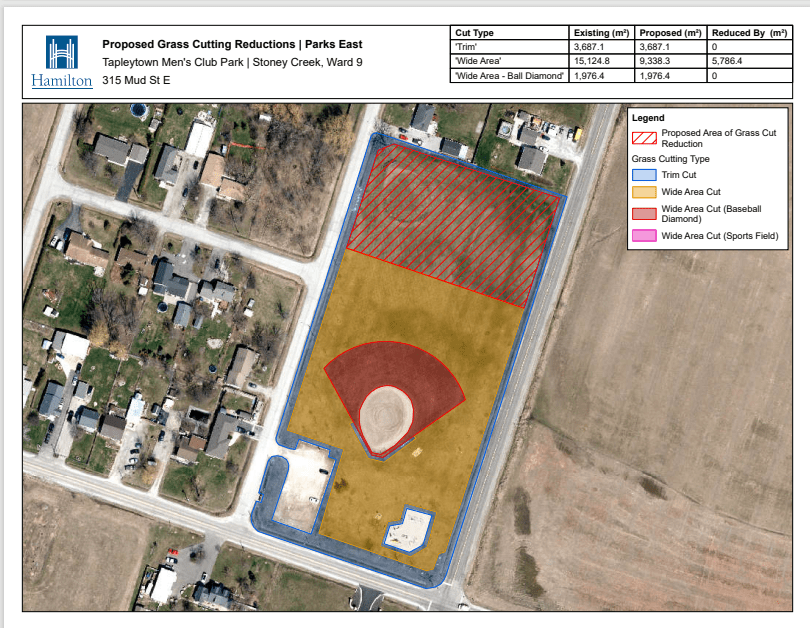
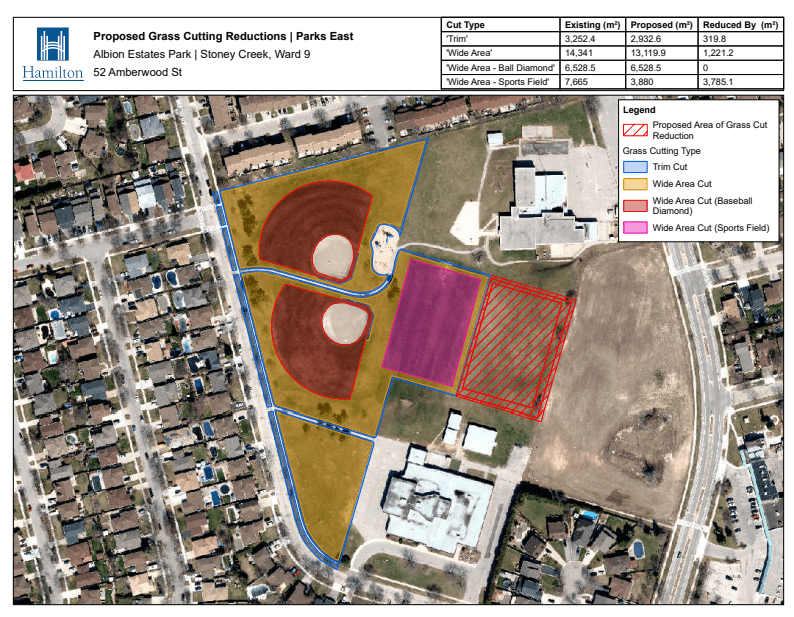
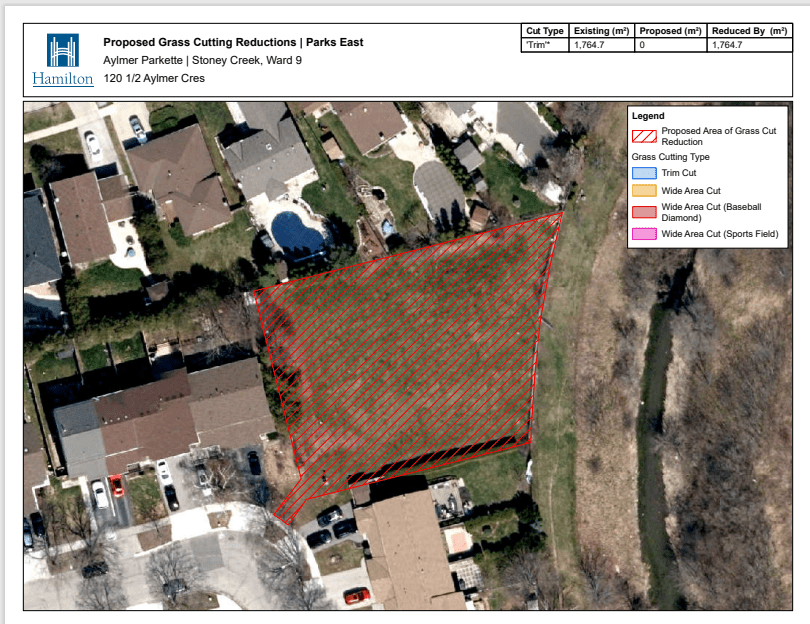
City staff have recommended the reduction of grass cutting in these parks/parkettes in Ward 9 (see graphics below). I have opposed this plan to reduce grass cutting on these properties without any public consultation. Staff are proposing a reduction in grass cutting in urban right of ways from 12 cycles to 9 cycles.

If you oppose this reduction in services, please write to the Mayor and Councillors to clerk@hamilton.ca
Please find below additional information regarding the proposed grass-cutting changes as provided by General Manager Jackie Kennedy.

Q1. What changes are being proposed for grass cutting in urban right-of-way areas?

A1: The City is adjusting its grass cutting schedule within municipal right-of-way areas, which are maintained by contracted services overseen by the Transportation Division of Public Works. The new approach keeps the current cutting cycle during the spring and early summer when grass grows most rapidly, but reduces the frequency later in the season when grass growth slows or becomes dormant. This means fewer cuts in late summer and fall, reflecting periods when mowing has limited visual or functional benefit. The annual cutting frequency will decrease from 12 to 9 cycles, resulting in a budget savings of $105,000. The City can add extra cuts if unusual weather leads to sustained grass growth. These changes are designed to maintain roadway safety, visibility, and urban appearance.

Q2. Will rural roadside mowing be affected by these changes?

A2: No, rural roadside mowing is not impacted by this proposal. It will continue as usual, following established service levels and practices from previous years. Although there were contractor delays in rural mowing in 2025, these issues have been resolved and are not expected to recur.

Q3: Will the changes affect sports fields?

A3: No, sports fields and key open grass areas in parks will continue to be mowed as usual.

Q4. What changes are proposed for grass cutting in City parks, open spaces, and private properties?

A4:  The City is proposing to reduce mowing in certain park areas and open spaces, resulting in a budget savings of $250,000. The reductions focus on non-City lands without service agreements and city properties with areas suitable for naturalization, such as spaces next to existing natural areas, woodlands, and unprogrammed spaces. Sports fields and key open grass areas in parks will continue to be mowed as usual. Areas not owned by the City and without agreements will receive notice that mowing will stop, but landowners can discuss establishing a paid service agreement if desired. Existing agreements, such as those with school boards adjacent to parkland, will continue.

Q5. Why are some areas being removed from the mowing program, and what happens next?

A5: To improve efficiency and focus staff on core services, the City reviewed mowing areas and identified some that could transition to naturalized landscapes. These areas, often adjacent to naturalized zones, will be promoted for biodiversity and healthy, native plant communities as part of the Biodiversity Action Plan. Residents will be informed about opportunities to participate in planting events as plans develop. Maps showing the spaces proposed for removal from the mowing program are available, with red dashed areas indicating where mowing will stop. Sports fields and key open spaces will remain part of the regular mowing program.

Q6. How will residents and landowners be notified about these changes?

A6: Landowners of non-City properties currently receiving mowing services without an agreement will be notified that the service will end. They may choose to discuss a formal agreement with the City if they wish to continue receiving mowing services, which would include compensation for the service.

Q7. Where can I find more information or see which areas will no longer be mowed?

A7: All spaces proposed for removal from the parks mowing program are shown in attached PDF map. The red dashed areas indicate spaces that will no longer be mowed. Key open spaces and sports fields will continue to be maintained by the parks team.

Toxic air complaints prompt Hamilton landfill probe

High total reduced sulphur counts prompts Clark to request review on possible public health impacts.

A motion by Ward 9 Coun. Brad Clark says a Hamilton Air Monitoring Network found total reduced sulphur compounds (TRS) levels above the provincial standards in Upper Stoney Creek. On July 3, 2025, the air monitoring network captured TRS numbers 17 times greater than the provincially accepted level. Several other tests between midnight and 7am significantly exceeded the provincial 10ppb standard, prompting Clark to call on staff to review this NEW data and advise of any public health impacts as a result of exposure to these high numbers.

https://www.thespec.com/news/canada/toxic-air-complaints-prompt-hamilton-landfill-probe/article_7e84fa83-1a46-5378-a3e8-8310469dae63.html

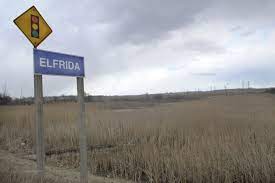
NOTICE: Elfrida Urban Boundary Expansion Application Public Hearing June 25, 2025

An Urban Boundary Expansion application, being an application to amend both the
Urban Hamilton Official Plan and Rural Hamilton Official Plan, has been submitted by the Elfrida Community Builders Group Inc., representing over 70% of the different land holdings in the Elfrida area.

The Elfrida lands are an “L shaped” grouping of lands that comprise an area of 1, 209 hectares in size. The subject lands are bounded by Upper Centennial Parkway, Mud
Street East, Second Road East, Hendershot Road, Golf Club Road, Trinity Church
Road and a Hydro Corridor. The location is shown on the map attached as Appendix 1.
A Concept Plan, submitted with the application, outlining intended land uses from a high
level perspective. The application proposes a variety of housing for 117,000 residents.

The applications were submitted to city planning staff on November 20, 2025, and deemed complete on March 18, 2025. The Planning Act requires a decision to be made by Council within 120 days of an application being deemed complete which started March 14, 2025 when all
materials were submitted.
City Council has been advised that the new Provincial Planning Statement was issued October 2024 and permits privately initiated urban boundary expansion applications to be submitted outside of a municipal comprehensive review and Bill 185 now permits a Council denial or non-decision of an application to be appealed to the Ontario Land Tribunal. NOTE: Council has approved a no urban boundary expansion growth strategy that is reflected in policy in the Urban Hamilton Official Plan.
The public hearing is likely to generate significant interest and speakers, presentations,
and correspondence. The urban boundary expansion application will also likely
generate significant discussion by Planning Committee members. Therefore, a Special
Planning Committee meeting will be held on June 25, 2025, followed by a Special
Council meeting directly after to ratify any Committee decision before the 120 day
deadline.
The White Church urban boundary Official Plan Amendment application will
also be considered at the same meeting.

Be Heard
Be heard on June 25, 2025.

I am encouraging residents to write to the Planning Committee to provide their comments. Whether you support the application or oppose it, you have the right to be heard. All documentation received and delegations helps to inform the Planning Committee’s decision and Council’s subsequent ratification. You can email your written documents to clerk@hamilton.ca no later than 48 hours prior to the public hearing. All residents who have written to the Planning Committee or appeared as delegates for the June 25 Special Planning Committee Public Hearing reserve their rights to appeal the Council decision to the Ontario Lands Tribunal.


Hamilton Water Winter Updates

Catch Basins: A catch basin is a structure that collects rainwater and prevents debris from entering the drainage system. It helps prevent flooding and keeps the system clear of pollutants. During winter months, it’s important to keep catch basins free of snow and ice. This allows proper drainage during thaw cycles and helps prevent flooding when the weather warms up. To keep catch basins working at their best in your neighbourhood:

  1. Keep ice and snow from collecting near catch basins, and help keep leaves and yard waste from roadways, ditches, and sidewalks.
  2. Dispose of litter properly to prevent blockages in the sewer system.
  3. Report any issues by calling 905-546-2489 for removal.

To report misuse of a catch basin, such as litter or pollutants, to report spills—any unusual release of pollutants, or request maintenance—call the City of Hamilton at 905-546-2489 (CITY). Connecting directly with an operator via the 24/7 Contact Center helps to ensure prompt cleanup, investigation, and prevention.  Catch Basin and Street Drain Use

Keep Hydrants Clear: Remember to shovel an area around fire hydrants, ensuring they remain visible and accessible for emergency responders. Winter Fire Safety

Frozen Pipe Awareness and Prevention: Protect your homes from frozen pipes. This video contains helpful tips: How to Keep Your Pipes from Freezing, and more information can be found on the Frozen Pipes page of our website.

Winter Safety Around Stormwater Ponds: Ice depth can vary significantly across the surface of stormwater ponds, and the continuous flow of water makes ice conditions unstable. Ponds collect runoff from roadways that contain salt, lowering the freezing temperature of the water. Air pockets can easily form in the ice, posing additional risks. Even if a stormwater pond appears fully frozen, it is important to stay off the ice. The ice may still be unstable, and there may be areas of open water beneath the surface. Many of these ponds are located in remote areas, far from help. It is imperative to stay off any ice surface, including stormwater ponds, regardless of their appearance. Stormwater Management Ponds.

Turn Off Your Water When You Go Away: Turning off the water when you go away protects your property. The City of Hamilton Leak Protection Program will not cover unattended homes that have not had the building control water valve turned off and the plumbing system drained. Homes left without heat for any period are also at risk. To request a water turn-off at the curb, call the City Contact Center at 905-546-2489 (CITY). There is a fee for this service.   Water Efficient Homes

These important messages will help ensure the safety and well-being of our community throughout the winter season.