
Toxic Air Complaints Prompt Hamilton Landfill Probe
High levels of sulfur-linked pollutants detected around Hamilton’s stinky dump, city to look at health impacts
CBC Article: https://www.cbc.ca/news/canada/hamilton/gfl-facility-health-effects-1.7598465

Councillor Brad Clark wants to put a cap on future tax increases.
By Scott Radley Reporter The Hamilton Spectator – February 12, 2025
There’s a chance that when council gathers Wednesday for its last real opportunity to trim the 2025 budget, it could have some success bringing down the looming tax increase a bit.
Mind you, after Friday’s seven-hour attempt at finding savings saw the coming hike whittled all the way from 5.7 per cent to 5.6 per cent, it feels like there’s a better chance of spotting the Loch Ness Monster in Hamilton Harbour than seeing the final number drop by much.
So perhaps it’s time to do this whole thing differently.
Coun. Brad Clark believes it’s time to stop asking city staff what they need and then hiking taxes to cover that amount. Instead, it’s time to give them an amount they can have and tell them to live within it. Require them to find efficiencies and redundancies and make it work.
On Wednesday, he’ll bring a motion asking to have staff report back on how it could operate within a 2.5 per cent increase next year. The cost of inflation, basically.
“Something has to be done”, he says.
Spending went up 19 per cent last year, he points out. It’s up another eight per cent this year. Capital spending is up monumentally. Water rates are way up. A stormwater fee is coming.
The nearly 18 per cent levy increases that have resulted from this council doing so much spending in just three years have been “a horrendous penalty” to taxpayers, Clark says.
The only reason taxes haven’t risen more than that is because city reserves have been heavily mined to cover many of the costs. These accounts aren’t bottomless pits, though. That’s unsustainable.
A few weeks ago, Coun. Matt Francis declared that this council has a spending problem. At the same meeting, Coun. Jeff Beattie said people are at their limit. Coun. Ted McMeekin said he hears from many folks about the increases. Other councillors have also spoken about the situation.
It’s not a secret why it’s all happening, Clark says.
“This is a bureaucracy that sees a council that is willing to spend excessively,” he says. “And so the general managers are coming forward and saying, ‘I need 10 more (employees), I need 20 more, I need 100 more.’ And they just keep adding. And the council keeps saying yes.”
The answer? If neither side has shown it has the self control to restrain itself, maybe a cap will help.
It’s not the first time something like this has been proposed. Not even the first time this term. Last year, McMeekin suggested a four per cent maximum increase on city spending. It had some support, but it never came to a vote before the budget process wrapped up.
On Friday, Francis introduced a motion to see what would be involved in capping this year’s tax increase at the Consumer Price Index level of 3.44 per cent, essentially reducing it to the level of a typical household’s cost increases.
That idea was rejected, in part because the items measured by CPI and the items purchased by the city aren’t an apples-to-apples comparison and also because it was too late to ask staff to create a whole new budget at this stage of the process.
Clark says his plan wouldn’t be for this year — it’s too late for that — but a different approach is needed going forward, he insists.
“At some point in the future, we’re no longer going to have the reserves,” he says. “We’re no longer going to have the financial gimmicks. You’re going to have to either make significant cuts and find significant efficiencies or you’re going to increase the taxes to the point where people are saying, ‘Hamilton is too high, I’m not going to live there anymore.’”
Residents are angry, he says. Some are feeling vulnerable because their costs are rising faster than their ability to pay. Some fresh thinking is needed.
Will his motion pass? He doesn’t know.
But he’s quite sure continuing along this path won’t lead anywhere good.
“I truly fear that we’re hitting a point where there will be a taxpayer revolt.”

City poet survives council search for budget savings
Reported by Scott Radley The Hamilton Spector – February 9, 2025
Before they’re done with the budget process, Hamilton councillors might indeed find a few things to shave. There’s another chance next week for the looming 5.6 per cent tax increase to be whittled a bit. But council has already decided there’s one thing that’s not to be cut. The poet.
Ah yes, the city’s official poet. This controversial position that council greenlighted in 2023 was potentially on the chopping block on Friday when Coun. Matt Francis brought forward a motion to axe the program.
It survived. So the poet in place remains in place. “Cities need vibrancy,” Mayor Andrea Horwath said, defending the program. “They need the arts.” Several other around the horseshoe shared her view.
Coun. Nrinder Nann said the poet inspires people and creates a sense of belonging during performances at libraries and other venues. Coun. Ted McMeekin said poetry’s important and adds to the quality of living. “I’ve always believed that without music and the arts, life is a mistake,” he said.
Coun. Cameron Kroetsch argued that arts programs aren’t a frill, they’re necessary. The poet is making a positive impact and talking about social issues, he explained. Besides, he adds, the $10,000 honorarium the poet receives (along with $15,000 in expenses) is a minuscule amount in the grand scheme of a $2.8-billion city budget. “This is literally austerity nickel-and-diming,” he said of the motion to chop it. So why then is this an issue?
Mostly because some other councilors say this poet position has become a lightning rod like no other in this community. Coun. Brad Clark said he holds four town halls a year, has six ward days in his community and he attends dozens and dozens of public events. “What I have heard consistently is that this has become the thorn,” he said. “This has become the burr under the saddle. This has become the exemplification of city hall’s waste. That’s what I hear all the time.”
Coun. Tom Jackson shared similar experiences. He gets comments about it constantly when people see him out and about. Same with Coun. Jeff Beattie, who said people have made it clear they see this whole situation as emblematic of loose pockets at city hall.
“Really what this is, is a symbolic representation of what residents see as out-of-control spending without any thought of consequence,” Coun. John-Paul Danko said. “What taxpayers say over and over and over again is, my taxes are going up by $500, $1,000 and you’re paying for a poet.”
This was probably inevitable. This position was launched by council at a time residents were staring at a 14.2 per cent tax hike. While that was ultimately reduced, introducing it at that moment obviously came across to some as tone deaf. In some corners, that view stuck.
The fact that this particular group of municipal politicians has never delivered a tax hike of lower than 5.6 per cent at a time when things have been tough for a lot of people hasn’t helped. Instead, it’s reinforced to many that all expenses coming out of city hall should fulfil needs alone, not wants.
Now that it’s in place though, it looks like it won’t be going anywhere.
Of course, the same could be said about a lot of things. Council spent seven often-cranky hours on Friday debating various motions that would save a few dollars here or cut a bit of spending there. When it was all done, it had found a grand total of about $500,000. That’s barely a scintilla of the total budget.
Indeed, the poet represents a fraction of even that. But to some, it’s a flashing beacon that stands for something more. “This is just a minor example of a major problem here at this council,” Francis said. “I don’t care if this program costs 10 bucks, people hate it and they want it gone. Period.”
In the end, councillors Mark Tadeson, Coun. Esther Pauls, Francis, Clark, Mike Spadafora, Beattie, Jackson and Danko agreed and voted to jettison the project. Councillors Alex Wilson, Craig Cassar, Tammy Hwang, Maureen Wilson, Kroetsch, McMeekin, Nann and Horwath voted to keep it.
Eight-eight – even split. The motion was defeated. The poet was saved. “How poetic,” Francis said.

Stoney Creek residents ‘at wits’ end’ on Taro dump odours
Councillor Clark blasts GFL for “cognitive disconnect” on complaints
Report Richard Leitner The Hamilton Spectator – February 3, 2025
GFL is coming under fire for claiming odours from its Taro industrial dump are now “minimal to moderate” and “fleeting” even as public complaints continue to pile up.
“I sincerely believe the residents are at their wits’ end at this experience,” area Coun. Brad Clark told company officials at a Jan. 30 online community update meeting on GFL’s progress in addressing odour complaints, an ongoing issue since 2023.
“I don’t understand how the residents can indicate that they’re smelling a strong odour and then the GFL staff go out to investigate and say there’s no odour — and that has been on the majority of odour complaints.” Clark said he can confirm odours were “powerful” over the Christmas break because he smelled them while out in the community, including attending church choir practices. “There seems to be a cognitive disconnect between what the experiences are of residents in upper Stoney Creek, including myself, and the reports that we’re receiving from GFL,” he said.
Dave Richmond, GFL’s vice-president for Eastern Canada, said the company isn’t “sitting on our laurels,” but odours aren’t like they were two summers ago, when public furor prompted the province’s environment ministry to order GFL to fix the problem — then attributed to the site’s leachate pond.
Odours can now also occur when GFL hits “a smelly spot” as it lowers waste stockpiles that were up to 14 metres above approved limits to comply with a separate ministry order, but work is halted and moved to another area when that happens, he said.
GFL expects to finish moving the stockpiles into new lined dump cells by the end of this year, when an enclosed plant to treat the site’s leachate — created when water seeps through waste — will also be in place to resolve odour issues, he said.
“When we say we didn’t detect anything, we’re not suggesting it’s your imagination. We accept the fact that there was an odour there, but it didn’t last long. By the time we got there, it was gone,” Richmond said. “When they do occur, they’re minimal to moderate, in terms of intensity, and they are fleeting,” he said, which is a big change from 2023 “odours that were clinging, that lasted for hours and hours with little respite from day to day.”
But Lulu Thompson, who said she lives two kilometres from the site, disputed that odours are less intense, recounting “the stench” when she placed a lunch order at the drive-thru Harvey’s restaurant by the dump’s northeast corner on Jan. 22.
“I thought I was going to vomit,” Thompson said, adding her server told her the overwhelming stink had been there all morning. “I looked straight up and there were all kinds of earth movers and all kinds of people rearranging your stockpiles,” she said. “I didn’t report it. Why? I’m discouraged. There’s a lack of clear answers. I don’t want to say accountability, I’m going to be nice. With GFL and your attitude concerning other complaints that we’ve seen in this meeting — it’s fleeting, it’s this — it’s something I don’t know anyone has ever smelled before. You say, what does it smell like? I don’t know, but I wanted to vomit.”
Tenysha Graham, who lives north of the dump, said odours were particularly bad during the Christmas break, but GFL rejected the dump was to blame when she complained.
A GFL website on actions taken by the company to comply with ministry orders shows the company received 24 complaints between Dec. 19 and Jan. 8. The ministry, which didn’t have a representative at the meeting, has previously said it received 898 odour complaints in 2024 as of Dec. 13, down from 1,132 complaints in 2023.
“I got responses back that it was fast food odours and things like that, which is obviously not the case because it smelt horrendous and it wasn’t fleeting or mild,” Graham said of her complaints to GFL. “I’ve had friends just try to drop me off in the neighbourhood and they’d be like, ‘Whoa, what is that smell?’ They smell it and I go, ‘Yeah, that’s the dump.’”

Hamilton says it needs $52 million to rebuild after cyberattack
Reporter Matthew VanDongen – January 18, 2025
Hamilton is poised to spend $30 million and hire 20 extra people this year to help recover from last February’s ransomware attack — an incident that will also feature in a new audit of city cybersecurity. But some information about the proposed new spending — and many details about the months-long investigation into how the cyberattack happened — remain confidential.
The relative scarcity of information has become “upsetting” for some residents, said city councillor Brad Clark, who put forward a motion Thursday asking staff to look at whether parts of a confidential report on the cybersecurity audit could be made public. “I think the administration and council has used the excuse of security — which is a prime concern — to withhold at least some information that could have been made public,” he said of the city’s cautious approach to sharing details about the cyberattack and recovery. “The costs are exorbitant … (so) the challenge becomes, if we are spending the kind of money that is being proposed here, and you don’t see exactly where it is being spent, then we are not being transparent.”
Hackers covertly gained access to Hamilton’s IT network last February and disabled a slew of services, affecting everything from bus service to tax bills to employee pay to building application availability. The city has since restored partial or full access to most services and officials are now focused on rebuilding, replacing or strengthening IT applications with the goal of protecting against future attacks. A high-level public report that went to councillors Wednesday lists $52 million in needed capital spending — and about 48 full-time positions — over three years to “build back better and stronger” after the cyberattack.
About $30 million of that total is currently slated to be built into the 2025 budget, drawing on a mix of reserves, debt financing and the tax levy. The city will use existing staff vacancies to help cover the cost of targeted new hires this year, said finance and corporate services general manager Mike Zegarac. He said examples of new hires required include positions like data and systems analysts, project managers and AI learning specialists.
There are 21 projects listed as priorities in the report, with the majority of funding aimed at IT application improvement or replacement related to asset management, fire department dispatch, building and licensing and financial management software.
But appendices outlining more details about projects and associated costs were kept confidential and only discussed by councillors behind closed doors.
City officials have also remained tight-lipped about the nearly year-long investigation into how the cyberattack happened or what vulnerabilities, if any, contributed to the hackers successfully sneaking into Hamilton’s IT network.
So far, the city has not even said what ransom amount was demanded by hackers — although it did announce no money was paid to the criminals. The Spectator asked when more details about the cyberattack would be shared, and why some new spending details remain confidential, but is still awaiting a response from the city manager’s office. In the past, however, top city officials have stressed a need to be cautious in sharing information about the ransomware incident and recovery for fear of opening the city to further attacks.
The planned audit, meanwhile, is actually a delayed followup on Hamilton’s responses to a cybersecurity review conducted in 2021, said auditor general Charles Brown.
Information about the findings of the 2021 cybersecurity audit were shared with councillors Thursday, but otherwise kept confidential.
“What concerns me is discussing what vulnerabilities we found in 2021 … when I don’t know whether these are still vulnerabilities (in the city IT network),” Brown said in an interview. A specialized consultant, Valencia Risk, will help conduct the followup audit and related look at the 2024 cyberattack.
Hamilton councillors approve wage increase for their office staff

Clark said, “What has frustrated me is people (some Councillors) have spent their budget before they knew what their budget is, or they assumed they would be able to change their budget and so they went ahead and hired more people.”
Hamilton will explore plan to have residents sign on to host homeless people

Stoney Creek Coun. Brad Clark urged caution as he had some “trepidation because several of the people living in tents have significant issues related to mental health and drug addiction that could be beyond the assistance of residents wanting to help.”
There will be nine councillors out of 15 who will share the $260,000 to bolster their office budgets.

Coun. Brad Clark said some councillors are spending beyond their means. There are four council offices that are in a deficit position. “They knew their budgets,” he said. “They have exceeded their budgets. It is disconcerting.”
“Council said we’re asking you to tell us how to do it; not if we want to do it,” Coun. Brad Clark, “And there is a distinct difference in that.”
Councillor Clark says Ford government is underfunding Hamilton homelessness work ‘dramatically’
https://www.cbc.ca/news/canada/hamilton/hamilton-housing-money-trudeau-ford-1.6937108


City to pursue ATV ban on Hamilton roads
https://www.thespec.com/news/council/2020/09/16/city-to-pursue-atv-ban-on-hamilton-roads.html
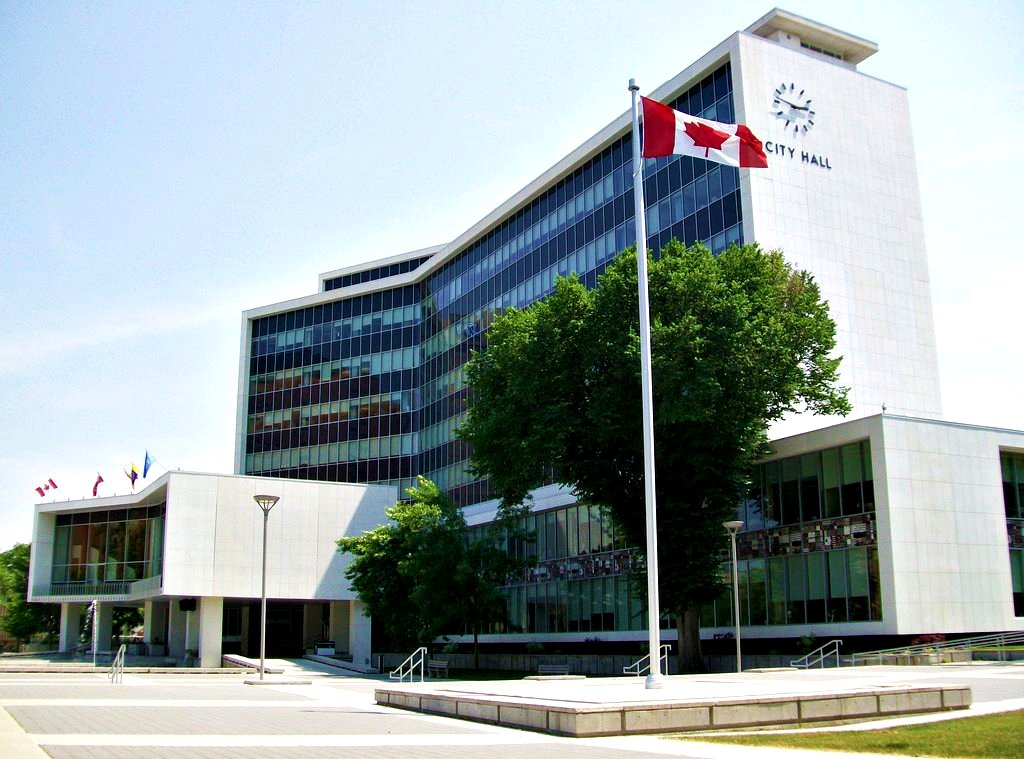
Hamilton city council and police should pull together on safety

Hamilton council asked for police chief, but board is sending reports

COVID-19 Council Closes Wild Water Works For Season

Devil’s Punch Bowl Special Parking Enforcement Coming Soon

Ward 9 councillor Brad Clark was the first to raise the question as to why the bid pivoted to 2026 instead of 2030, which made more sense given the timing and symbolism.

Council bans sale and display of fireworks in Hamilton
https://www.hamiltonnews.com/news-story/9987844-sparks-fly-over-hamilton-s-fireworks-ban/

Clark calls for a Residential Care Facility Liaison

Hamilton approves motion to create outdoor dining areas for physical distancing

Cannabis Grow Op Odours and Lights To Be Regulated
https://www.hamiltonnews.com/news-story/9962176-hamilton-to-crack-down-on-cannabis-grow-operations/
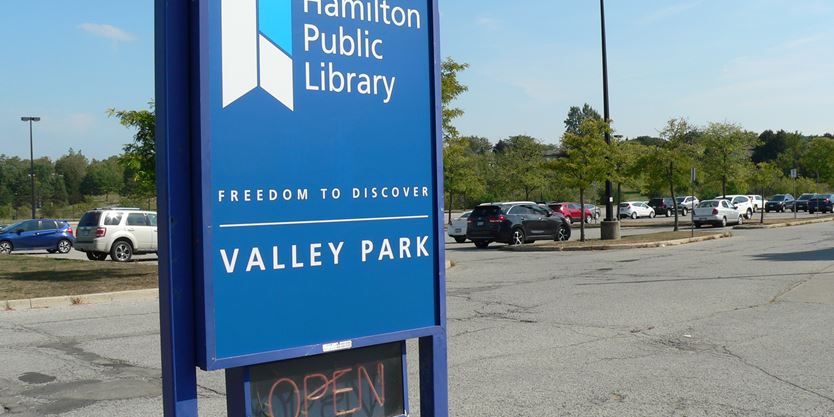
Clark Apologizes to Residents Over Delays in Valley Park Renovations

Hamilton Councillor Calls for Tougher Stance on Gun Crime in Wake of Shooting
The public deserves to have answers’ council hears letter by father of RHVP victim
‘The public deserves to have answers’ council hears letter by father of RHVP victim
 Brad Clark Report
You must be logged in to post a comment.